Ever wonder how professional kitchens, bustling food processors, and even specialized manufacturers keep their goods pristine and safe for extended periods? The secret often lies in one unsung hero: the Industrial Vacuum Sealer Machine. If you’re serious about food preservation, reducing waste, or safeguarding valuable products, understanding these robust machines is paramount. An industrial vacuum sealer machine is far more than a kitchen gadget; it’s a strategic investment, engineered to perform under relentless demand and deliver unparalleled results.
What Exactly is an Industrial Vacuum Sealer Machine?
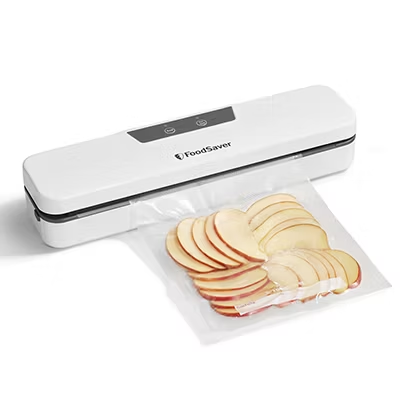
At its core, an industrial vacuum sealer machine is a powerful piece of equipment designed to remove air from a package before hermetically sealing it. This process creates an airtight, oxygen-free environment that dramatically slows down spoilage, prevents oxidation, and protects contents from moisture, dust, and other contaminants. Unlike their home-use counterparts, industrial units are built for continuous, heavy-duty operation in commercial and manufacturing settings. They are the backbone of efficient packaging lines, ensuring product integrity and extending shelf life across various industries.
Industrial vs. Home Vacuum Sealers: The Professional Edge
The differences between an industrial vacuum sealer machine and a standard home vacuum sealer are vast, much like comparing a robust work truck to a family sedan. While both serve the purpose of removing air, industrial machines are engineered for a completely different scale of operation and durability.
Think about it: an industrial-grade unit features significantly stronger vacuum pumps and often includes a built-in compressor, providing consistent, high-power suction that household models simply can’t match. Their construction typically boasts reinforced, food-grade stainless steel, built to withstand the rigors of daily commercial use, frequent cleaning, and demanding environments. Cycle times are much faster, designed to keep up with high-volume production, not just a few bags here and there. Advanced control systems allow for precise adjustments to vacuum levels and sealing times, crucial for diverse product needs. Moreover, industrial machines often utilize smooth, more economical vacuum bags, which offer substantial cost savings over time compared to the specialized, textured bags often required by external home sealers.
For any business or even a highly dedicated home user with significant preservation needs, recognizing these distinctions is key. An industrial vacuum sealer machine isn’t just an upgrade; it’s a leap in capability, efficiency, and long-term cost-effectiveness.
Exploring the Different Types of Industrial Vacuum Sealer Machines
The world of industrial vacuum sealers is diverse, with various types designed to meet specific operational demands. Understanding them helps in choosing the perfect machine for your needs.
Chamber Vacuum Sealers: The Industry Workhorse
This is by far the most popular type in industrial settings. With a chamber vacuum sealer, you place the entire bag (or multiple bags) inside a designated chamber. Once the lid closes, the machine evacuates all the air from the entire chamber, not just the bag. This ingenious method equalizes the pressure inside and outside the bag, making them ideal for sealing liquids, soups, marinades, or moist foods without drawing the contents into the pump.
- Tabletop Chamber Sealers: Compact yet powerful, suitable for small to medium-sized operations or specific workstations within a larger facility.
- Floor-Standing Chamber Sealers: Larger, more robust units designed for high-volume, heavy-duty industrial use, offering substantial chamber sizes and often multiple seal bars for increased throughput.
- Double-Chamber Vacuum Sealers: These machines feature two chambers that operate independently. While one chamber is actively vacuuming and sealing, the other can be loaded, significantly boosting efficiency and reducing downtime in high-production environments.
External (Nozzle) Vacuum Sealers
While more commonly found in home kitchens, industrial-grade external or nozzle vacuum sealers do exist. These machines use a retractable nozzle that’s inserted directly into the bag to remove air before sealing. They are generally better suited for dry goods and solid items, as sealing liquids can be challenging without special precautions. Their advantage often lies in their smaller footprint compared to chamber machines.
Specialized Industrial Sealers
For very specific applications, other types of industrial vacuum sealers offer tailored solutions:
- Belt Vacuum Sealers (Continuous): Fully automated systems integrated into production lines, perfect for extremely high-volume, continuous packaging.
- Vertical Vacuum Sealers: Designed for products that need to remain upright during sealing, such as liquids, powders, or products in stand-up pouches.
- Skin Packaging Vacuum Sealers: These create a vacuum-tight film that molds precisely around the product, offering a tamper-evident seal and excellent product presentation, often used for fresh meats or electronics.
Making the Right Choice: Key Features to Look For
Selecting an industrial vacuum sealer machine isn’t just about picking the first one you see. It’s about matching the machine’s capabilities to your operational needs. Here are critical features to consider:
- Durability and Build Quality: Look for machines constructed from high-quality, food-grade stainless steel. This ensures longevity, resistance to corrosion, and easy sanitation, which is vital in commercial settings.
- Vacuum Pump Power and Reliability: The heart of any vacuum sealer is its pump. Industrial machines should feature powerful, reliable vacuum pumps (often Busch pumps are a benchmark) that can achieve and maintain consistent vacuum levels quickly.
- Control Systems and Programmability: Advanced control panels with digital displays and programmable settings allow operators to fine-tune vacuum levels, seal times, and even gas flush options for Modified Atmosphere Packaging (MAP), catering to a wide array of products.
- Seal Bar Quality and Size: A robust seal bar with consistent heat distribution is crucial for airtight, reliable seals. Consider the length and number of seal bars based on the size and quantity of packages you need to process. Dual seal bars, for instance, can double output.
- Chamber Size (for Chamber Sealers): Ensure the chamber dimensions are ample for your largest items, or allow for multiple smaller items to be sealed simultaneously, maximizing efficiency per cycle.
- Ease of Maintenance and Cleaning: In any industrial environment, hygiene is paramount. Machines with easily removable seal bars, smooth stainless steel surfaces, and accessible components simplify routine cleaning and maintenance, extending the machine’s lifespan.
As Dr. Eleanor Vance, a leading expert in food science and industrial packaging solutions, puts it, “The long-term value of an industrial vacuum sealer machine isn’t just in its initial performance, but in its consistent reliability and how seamlessly it integrates into your workflow, ultimately protecting both your product and your bottom line.”
The Unrivaled Benefits of Investing in an Industrial Vacuum Sealer
The advantages of deploying an industrial vacuum sealer machine are far-reaching, transforming how businesses handle preservation, efficiency, and profitability.
Dramatic Extension of Shelf Life and Enhanced Food Safety
By removing oxygen, industrial vacuum sealers inhibit the growth of aerobic bacteria, molds, and yeasts, which are primary causes of spoilage. This can extend product shelf life by an astounding 50% to 400%, depending on the item. For food businesses, this means fresher ingredients, longer product availability, and significantly less waste. Beyond freshness, vacuum sealing creates a robust barrier against external contaminants like dust, moisture, and insects, ensuring products remain hygienic and safe for consumption or use. This is critical for meeting stringent food safety regulations and protecting consumer health.
Significant Cost Savings and Waste Reduction
Reduced spoilage directly translates to substantial cost savings. Businesses can purchase ingredients in bulk when prices are favorable, portion them out, and vacuum seal them for future use without fear of degradation. This optimizes inventory management, minimizes throwaways, and enhances profitability. The compact nature of vacuum-sealed packages also saves valuable storage space, whether in refrigerators, freezers, or warehouses, and can even lower shipping costs by optimizing cargo volume.
Preserving Quality: Flavor, Texture, and Nutrients
Vacuum sealing locks in the natural flavors, textures, and nutritional value of food. It prevents freezer burn, a common issue where food loses moisture and develops ice crystals, leading to dry, tasteless results. For marinated foods, the vacuum process can even accelerate the infusion of flavors, creating a deeper, more consistent taste profile.
Boosting Operational Efficiency and Speed
Designed for speed and consistency, industrial vacuum sealers dramatically accelerate the packaging process compared to manual methods. With features like faster cycle times, programmable settings, and double chambers, these machines can quickly process large volumes, enabling businesses to meet high demand, streamline operations, and increase overall productivity.
Versatility Beyond the Kitchen
While often associated with food, the applications of an industrial vacuum sealer machine stretch far beyond:
- Pharmaceuticals and Medical: Sterilizing and protecting medical devices, compounds, and sensitive components from moisture and contaminants.
- Electronics and Manufacturing: Safeguarding delicate electronic parts, metal components, and hardware from rust, static discharge, and environmental damage.
- Archiving and Collectibles: Preserving important documents, valuable collectibles, and delicate artifacts from oxidation, humidity, and pests for long-term storage.
- Culinary Arts (Sous Vide and Marinating): Professional chefs widely use vacuum sealers for sous vide cooking, ensuring perfectly cooked food with consistent results. They are also indispensable for rapid marination, where the vacuum pressure quickly draws marinades into the food.
How Industrial Vacuum Sealer Machines Work: A Closer Look
The fundamental principle behind all vacuum sealers involves evacuating air and then sealing the package. However, industrial machines execute this with superior power and precision.
In a chamber vacuum sealer, the entire item-filled bag is placed within an enclosed chamber. When the lid is shut, a powerful vacuum pump rapidly extracts all the air from the entire chamber. This process means the air pressure inside the bag and around it equalizes, preventing liquids from boiling or being sucked out. Once the desired vacuum level is reached, a heated seal bar quickly melts and fuses the plastic of the bag opening, creating an impenetrable, airtight seal. After sealing, air is reintroduced into the chamber, and the lid opens, ready for the next cycle.
External industrial vacuum sealers operate by positioning the open end of a specialized bag over a vacuum channel or nozzle. The machine’s pump then directly suctions air out of the bag until the desired vacuum is achieved, at which point the heat seal bar activates to seal the bag shut.
Key components like the robust vacuum pump, the precise heating element of the seal bar, and the intuitive control panel work in harmony to ensure reliable, repeatable results every time.
Tips for Maximizing Your Industrial Vacuum Sealer’s Performance
To get the most out of your industrial vacuum sealer machine, consider these practical tips:
- Choose the Right Bags: Use high-quality, appropriate vacuum sealer bags for your machine type (e.g., smooth bags for chamber sealers, textured bags for external nozzle sealers). Ensure they are thick enough to prevent punctures from sharp objects.
- Prepare Items Properly: For food, ensure items are cool before sealing to prevent steam from interfering with the vacuum. Keep the sealing area clean and dry to ensure a perfect seal. For items with sharp edges, use paper towels or bag protectors to cushion them.
- Regular Cleaning and Maintenance: Industrial machines require consistent cleaning to prevent residue buildup and maintain hygiene. Regularly inspect seal bars, gaskets, and oil levels (if applicable for oil-based pumps). Follow manufacturer guidelines for routine maintenance to ensure longevity.
- Optimize Settings: Experiment with vacuum levels and seal times for different products. Delicate items may require a gentler vacuum, while thicker bags need a longer seal time. Programmable settings on industrial machines are a game-changer here.
Frequently Asked Questions About Industrial Vacuum Sealers
What’s the best industrial vacuum sealer for a small business?
For most small businesses, a tabletop chamber vacuum sealer is an excellent starting point. It offers the professional performance of an industrial machine in a more manageable size and at a lower initial cost than a floor-standing unit, while still handling liquids and providing superior vacuum strength.
Can industrial vacuum sealers handle liquids?
Absolutely! Chamber industrial vacuum sealers are specifically designed to handle liquids and moist foods with ease. Because the air is evacuated from the entire chamber, the pressure inside and outside the bag remains equal, preventing liquids from being drawn out during the vacuum process.
How often should an industrial vacuum sealer be maintained?
Maintenance frequency depends on usage, but typically, industrial vacuum sealers require daily cleaning of surfaces and seal bars. More in-depth maintenance, such as checking and changing vacuum pump oil (for oil-based pumps) and inspecting gaskets, should be performed weekly or monthly, as recommended by the manufacturer.
What kind of bags do industrial vacuum sealers use?
Most industrial chamber vacuum sealers use economical, smooth vacuum sealer bags. These bags are generally cheaper than the textured or channeled bags required by many external vacuum sealers because they don’t need the embossed channels for air evacuation within the machine.
Is an industrial vacuum sealer worth the investment for a home user?
For the average home user, probably not. However, for a “prosumer” or someone with significant needs—like a hunter, a gardener with large harvests, a chef who frequently uses sous vide, or someone running a very small home-based food business—an industrial-grade chamber vacuum sealer can be a highly worthwhile investment. The initial cost is higher, but the superior performance, durability, and lower long-term bag costs can quickly justify it.
Conclusion
An industrial vacuum sealer machine is an indispensable asset for any operation committed to excellence in preservation, efficiency, and product quality. From significantly extending shelf life and ensuring food safety to reducing waste and streamlining operations, its benefits are profound. By understanding the different types, key features, and optimal usage, you can harness the full power of industrial vacuum sealing technology. It’s more than just a machine; it’s a foundation for greater profitability, reliability, and peace of mind. Explore the possibilities, invest wisely, and elevate your preservation game to a professional level.